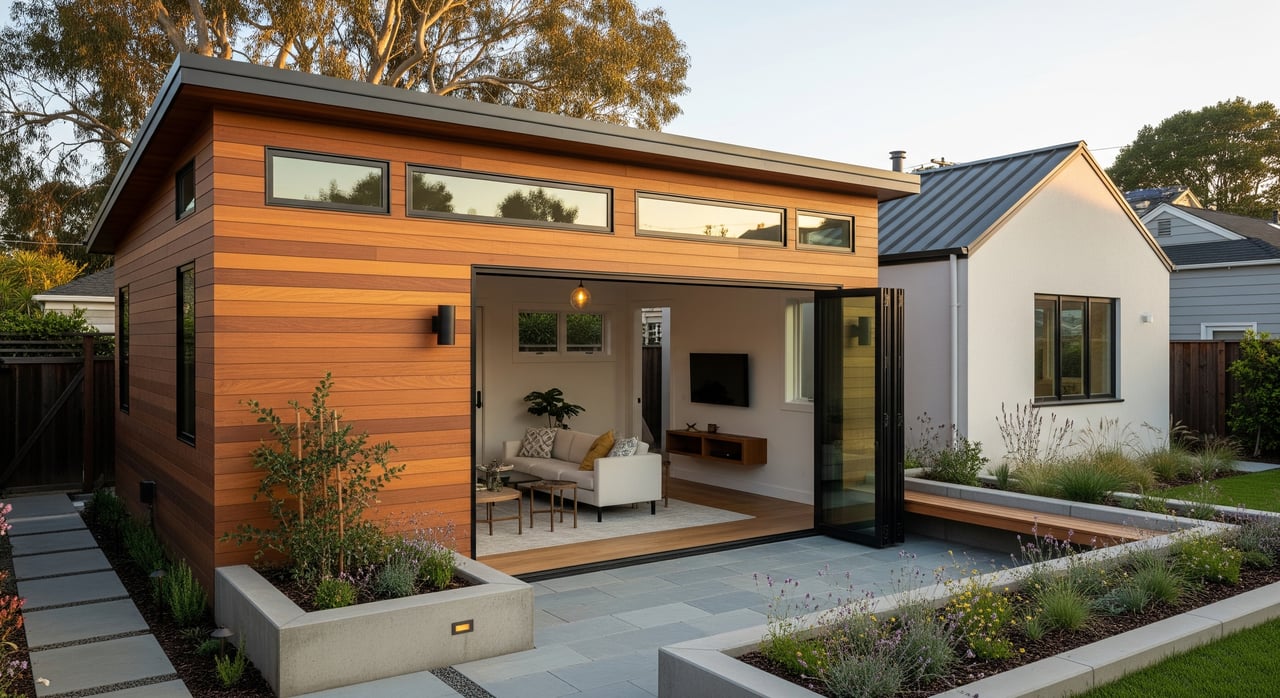
Thinking about adding an ADU to your San Carlos home, but not sure what is actually allowed? You are not alone. Many homeowners see the value, yet the mix of state and local rules can feel confusing. In this guide, you will learn what California allows, what to verify with San Carlos, how to test feasibility on your lot, and the basic permit steps and timelines. Let’s dive in.
California ADU basics
California law sets the foundation for what you can build, and cities must follow it while applying local objective standards.
- A Junior ADU (JADU) can be up to 500 sq ft, and it is created within the walls of your existing single-family home.
- Detached ADUs often allow up to 1,200 sq ft as a baseline unless a city sets an objective cap within state limits.
- If your ADU meets objective standards, the city must use ministerial review. State law sets decision deadlines for complete applications, commonly referenced as about 60 days.
- Parking requirements are limited by state rules. Many ADUs are exempt from new parking if they are near public transit, created by converting existing space, or located in certain parking districts.
- There is no minimum lot size requirement for ADUs under state law, and there are limits on impact fees for smaller ADUs. Always confirm current details before you plan.
San Carlos rules to verify
San Carlos must implement state ADU law, and it can add objective standards that shape your design and placement. Because local ordinances can change, confirm these items with the City of San Carlos Planning Division or the municipal code before you finalize plans.
Size and unit count
Ask the city about maximum square footage for both detached and attached ADUs, plus the JADU cap. Confirm whether a single-family lot may include both a detached ADU and a JADU, and whether any percentage-of-primary-home rule applies.
Setbacks, height, lot coverage
Verify required side and rear setbacks for a detached ADU, whether front setbacks apply, and the maximum height. Check how ADU square footage interacts with lot coverage or floor-area-ratio rules so you know what will fit on your parcel.
Parking rules and waivers
Confirm if an extra parking space is required and when it is waived. Ask about parking exemptions for ADUs near transit (San Carlos has a Caltrain station), for conversions of existing space, and what happens if you remove or convert a garage. Clarify rules for tandem parking as well.
JADUs in San Carlos
Verify whether JADUs are allowed, the maximum size at up to 500 sq ft, and whether owner occupancy applies. Ask if a JADU can have its own entrance, and how bathrooms and kitchen facilities are handled within the existing home.
Utilities and impact fees
Ask if you need separate water or sewer meters, or if you can connect to existing lines. Confirm utility connection fees and whether smaller ADUs face reduced impact fees. Discuss drainage and stormwater rules early, since they can affect site design.
Fire and safety
Check with the Fire Department or Fire Marshal about fire sprinklers and access requirements. San Mateo County includes areas with elevated fire risk, so clarify any wildfire-related standards that could shape materials or siting.
Design and historic areas
State law limits discretionary design review for qualifying ADUs, but objective design standards can still apply. If your home is in a historic district or overlay zone, ask about any extra steps.
Short-term rentals
Confirm whether ADUs may be used for short-term rentals. Many cities restrict short-term rentals for ADUs, so understand what is permitted before you plan your use or pro forma.
Approvals and timelines
Ask how San Carlos processes ADU applications and the expected review timeline. State deadlines apply to complete, qualifying applications, but your total timing depends on plan check cycles and project complexity.
Feasibility checklist
Use this quick screen to see if your property is a good candidate. Follow up with the City for parcel-specific answers.
- Zoning: Is your lot in a residential zone that allows ADUs? Are there overlays or historic constraints?
- Lot layout: Do you have enough rear or side-yard area to fit the footprint within setbacks and height limits?
- Existing structures: Do you have a garage, attic, or basement that could be converted more cost-effectively?
- Parking: Would state parking exemptions apply, such as conversion of an existing structure or proximity to transit like Caltrain?
- Utilities: Can your existing water, sewer, and electric service support an extra unit? Are separate meters required?
- Access and privacy: Can you provide safe access and egress and design for privacy between the primary and ADU?
- Budget and financing: Do a rough budget and evaluate financing options such as a construction loan, home-equity loan, or cash-out refinance.
Common ADU uses
- Multigenerational living for parents or adult children, with privacy and independence.
- Long-term rental income to support mortgage or retirement plans.
- Short-term rental, if local rules allow, for occasional guest stays.
- Home office, studio, or guest space that boosts day-to-day living.
- Equity planning for future sale or lease options as your needs change.
Costs and tradeoffs
Every site is different, but these general ranges can help you set expectations.
- Garage or interior conversion (JADU or ADU conversion): roughly $40,000 to $150,000, depending on scope and systems.
- New detached ADU: roughly $150,000 to $400,000+, depending on size, finishes, site work, and required upgrades.
These are broad market ranges. Site conditions, utility extensions, drainage, seismic or fire-safety requirements, and material or labor costs can move the total higher. Obtain local contractor bids before committing to a budget.
Permitting steps
Your permit path will vary by scope, but this high-level flow shows what to expect.
- Preliminary research (1 to 2 weeks)
- Confirm zoning, allowed ADU types, setbacks, height, and parking rules with the City. Check basic utility capacity with providers.
- Pre-application or planning intake (1 to 4 weeks to schedule)
- Meet with planning staff or submit a pre-application to confirm objective standards and flag issues like historic or fire constraints.
- Prepare plans (2 to 8+ weeks)
- Hire a designer or architect to produce site plans, floor plans, elevations, and any required engineering. Conversions often need simpler plans.
- Submit application (timing varies)
- The City reviews zoning conformance and building code compliance. Ministerial review applies to qualifying ADUs, and state timelines commonly reference about 60 days for action on complete applications.
- Plan check and corrections (2 to 8+ weeks)
- You may have several correction rounds with building and fire reviewers. Address comments promptly to stay on schedule.
- Permit issuance (variable)
- Once approvals and fees are complete, permits are issued and you can start construction.
- Construction
- Conversions may take weeks to a few months. New detached ADUs typically run several months, often 3 to 9 months depending on scope and contractor availability.
- Inspections and final occupancy
- Inspections occur during construction. A final inspection and certificate of occupancy close the process.
Typical total timelines
- Conversion or JADU: about 2 to 6 months from start to finish in many cases.
- New detached ADU: about 6 to 12+ months, depending on scope and plan review cycles.
How we help you plan
An ADU can expand your lifestyle, support family, or unlock rental income, but it should also serve your long-term real estate goals. As a boutique husband-and-wife team on the Peninsula, we help you evaluate ADU potential through a practical lens: neighborhood demand, likely rent ranges, resale impact, and timing.
- If you own: We discuss your goals, review basic feasibility, and help you decide whether to build and hold, or to prepare for a future sale that highlights ADU potential. If you plan to lease the unit, we offer full-service leasing and placement.
- If you are buying: We help you target San Carlos homes with layouts and lots that tend to work for ADUs, then weigh tradeoffs like parking, utility access, and privacy.
- If you plan to sell: We can help you position ADU potential in your listing strategy and marketing. When pre-sale improvements make sense, we can explore Compass Concierge for upfront project support that is repaid at closing.
If you want a clear, local plan built around your goals, let’s talk. Connect with The Fallant Team to Schedule a Consultation.
FAQs
What sizes are allowed for ADUs in San Carlos?
- California allows a JADU of up to 500 sq ft and many detached ADUs up to 1,200 sq ft unless the city sets an objective cap, so confirm San Carlos’s exact limits before you design.
Do ADUs in San Carlos require new parking spaces?
- State law waives new parking in many cases, including near public transit or when converting existing space, but you should verify San Carlos’s rules and your parcel’s distance to Caltrain.
How long does ADU approval take in San Carlos?
- Qualifying ADUs are processed ministerially under state timelines that commonly reference about 60 days for complete applications, though total project timing depends on plan check cycles and construction.
Can I build both a JADU and a detached ADU in San Carlos?
- Many California cities allow one detached ADU plus one JADU on a single-family lot, but unit counts vary locally, so confirm with San Carlos before you plan around that assumption.
Are short-term rentals allowed for ADUs in San Carlos?
- Many cities restrict short-term rentals in ADUs, so check San Carlos’s current regulations to see if short stays are permitted for your unit.
Will my ADU need separate utilities or sprinklers in San Carlos?
- Requirements vary by project and fire-safety needs, so verify meter and connection rules with the City and confirm any fire sprinkler requirements with the Fire Department or Fire Marshal.