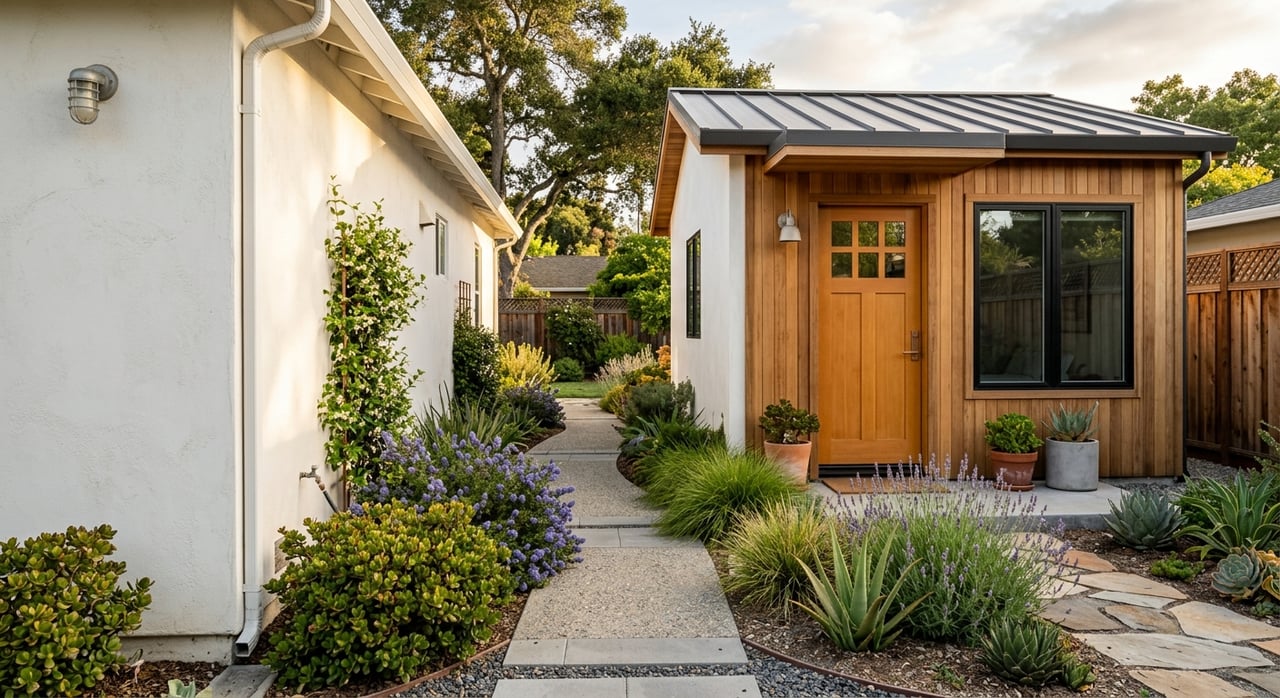
If you are thinking about buying a rental in Redwood City, the first question is not whether people want to live there. They do. The real question is whether a specific property will work once you factor in high purchase prices, local rules, and neighborhood-by-neighborhood differences. This guide will help you understand where demand comes from, what can affect returns, and which local regulations deserve close attention before you buy. Let’s dive in.
Why Redwood City draws renters
Redwood City benefits from a central Peninsula location about 25 miles south of San Francisco and 27 miles north of San Jose. The city points to direct Downtown access to Caltrain and SamTrans, along with convenient connections to Highways 101 and 280. For renters, that mix can support daily convenience and commute flexibility.
The local employer base also adds to housing demand. Redwood City highlights employers including Electronic Arts, Box, Poshmark, C3.ai, Impossible Foods, Kaiser Permanente, Stanford University, and Stanford Healthcare. A broad employment base like this can help support steady interest in well-located rental housing.
Another key data point is the city’s renter share. Redwood City says more than half of residents rent their home, and landlords provide over 12,000 rental units. For investors, that signals a meaningful renter population, but it also points to a market where compliance matters.
What the numbers suggest
Redwood City is often more of a long-term hold market than a high-cash-flow market. Public market data shows why. Redfin lists the city’s median sale price at $1.931 million in March 2026, while Zillow shows average asking rent at $3,198 across all bedrooms and property types, or about $5,000 for a three-bedroom apartment.
Using those public figures as a rough illustration, gross yield looks tight. At the citywide average rent, the gross yield is around 2.0%. Using the three-bedroom average, it is around 3.1% before taxes, insurance, maintenance, vacancy, and management.
That does not mean Redwood City is a poor investment market. It means careful underwriting matters more than broad assumptions. Properties that are priced below neighborhood median, include more than one rentable unit, or offer features like parking, transit access, updated condition, or accessory-unit potential may pencil differently than headline averages suggest.
How to think about returns
For many small investors, a clean public cap rate for a single home is hard to find. A more useful benchmark is Bay Area multifamily research. CBRE’s H2 2025 survey shows stabilized multifamily infill cap-rate ranges of roughly 4.5% to 5.0% in San Francisco and 4.25% to 4.75% in San Jose, with value-add product generally a bit higher.
Those figures are not Redwood City cap rates for every property type. Still, they give useful context. In a city with expensive acquisition costs, your return often depends on buying the right basis, setting the right rent, and understanding exactly what your operating costs and local obligations will be.
The broader rental backdrop remains supportive. CBRE reported Bay Area rents grew 4.3% year over year in 2025, vacancy was 4.2% in Q4, and absorption outpaced deliveries. That suggests renter demand in the region has remained relatively healthy.
Why local regulation matters
In Redwood City, compliance should be part of your underwriting from day one. State law and city law can both affect how you operate a rental. If you are buying with plans to lease the property, you will want to confirm which rules apply before you close.
California’s Tenant Protection Act generally limits annual rent increases to 5% plus local CPI, or 10%, whichever is lower, and adds just-cause eviction protections once the statutory occupancy threshold is met. The California Department of Justice advises landlords to stay current on both state and local requirements because rules can vary by city and property type.
Redwood City also adopted a new Tenant Protection Ordinance effective January 1, 2026. According to the city, the ordinance includes minimum lease terms, just-cause eviction protections, and tenant relocation assistance. It applies to most multi-unit residential properties, with exemptions that include owner-occupied homes, single-family homes and condominiums unless corporate-owned, owner-occupied duplexes, new construction built within the last 15 years, deed-restricted affordable housing, and certain specialized occupancies.
Key leasing rules to know
One of the most important local details is the required initial lease term. Under the city ordinance, landlords must offer a one-year lease at initial lease-up. If your investment plan assumes a different lease structure, that is something to address early.
No-fault terminations can also trigger specific notice and relocation requirements. Redwood City states that all tenants receive relocation assistance equal to one month of rent. Qualifying low-income households may receive 3 months of HUD Fair Market Rent plus a security-deposit refund and a 60-day rental-agency subscription, and qualifying low-income households with special circumstances may receive 4 months of Fair Market Rent plus those same added benefits.
The city also requires a Residential Rental Business License for landlords managing or renting two or more residential units. The current fee schedule, effective July 1, 2025, lists a $90 annual registration fee plus $31 per unit, with a 50% phase-in in the first year and the full rate beginning July 1, 2026. These are not huge numbers in the context of Peninsula real estate, but they still belong in your operating budget.
Neighborhoods can change the investment story
Redwood City is not one uniform rental market. The city recognizes 17 neighborhood associations, and its planning framework separates additional areas such as Downtown, North Main Street, Peninsula Park, Marina Shores Village, Sequoia Hospital, Stanford in Redwood City, and the El Camino Real Corridor. In practical terms, demand, pricing, and redevelopment pressure can vary a lot from one area to another.
That is why a citywide rent average only tells part of the story. A rental near transit, downtown services, or major employment access may attract a different renter profile than a property in a higher-basis hillside area. When you evaluate a purchase, micro-location matters.
Downtown and Central Redwood City
Downtown and Central Redwood City are the clearest transit-oriented submarkets. Redfin shows a Downtown median sale price around $1.5 million and Central Redwood City around $1.79 million, and both are described as very competitive. With Caltrain access in the heart of downtown and active planning around the Greater Downtown Area, these are natural areas to watch for renter demand tied to convenience and transit access.
The city’s Downtown Precise Plan also points to significant office and residential development, while the Greater Downtown Area Plan through 2027 will guide land use, connectivity, urban design, infrastructure, historic preservation, and climate adaptation. For investors, that means downtown is evolving rather than static. In a changing submarket, small block-level differences can matter a lot.
Redwood Shores
Redwood Shores presents a different entry point. Redfin shows a median sale price around $1.25 million, with homes selling in about 14 days and many receiving multiple offers. That lower entry price relative to some central or hillside neighborhoods does not guarantee better returns, but it can make Redwood Shores worth a closer look in a high-cost city.
For some investors, the appeal is balancing a still-competitive submarket with a lower basis than premium neighborhoods. The key is to compare likely rent, carrying costs, and property condition instead of assuming a lower purchase price automatically creates stronger cash flow.
Palm Park and Centennial
Palm Park and Centennial sit closer to the middle of Redwood City’s pricing spectrum. Palm Park’s median sale price is about $1.45 million, and Centennial’s is about $1.5 million. Both are described as very competitive.
These submarkets can be useful examples of more attainable central-area options compared with higher-priced neighborhoods. If you are trying to stay in Redwood City without stretching to top-tier acquisition costs, these areas may deserve attention during your search.
Sequoia and Emerald Hills
At the premium end, Sequoia and Emerald Hills illustrate how basis can squeeze yield. Redfin shows Sequoia around $2.79 million and Emerald Hills around $4.07 million, with both neighborhoods highly competitive. In general, higher entry prices can make it harder for a standard rental strategy to produce strong gross yield.
That does not rule out an opportunity. It simply means the property may need unusually strong rentability, multiple income streams, or features that support above-average income. Without those factors, premium pricing can make the math harder.
A practical underwriting checklist
Before you buy a rental in Redwood City, it helps to slow down and test the basics. In a thin-yield market, small mistakes can have a big effect on performance.
Here are a few smart questions to ask:
- What is the likely market rent for this exact property type and location?
- Is the property subject to state rules, city rules, or both?
- If it is multi-unit, does the Redwood City tenant ordinance apply?
- Will you need a Residential Rental Business License?
- Does the property have features that can support a rent premium, such as parking, updated condition, or transit convenience?
- Are you buying for current cash flow, long-term hold potential, or flexibility to improve, lease, or eventually sell?
A careful review of those items can help you avoid underwriting a property based on citywide averages alone. In Redwood City, the details often decide whether a rental is merely expensive or genuinely strategic.
When a local advisor adds value
Because Redwood City is both expensive and highly regulated, local guidance can be especially useful. The biggest risk is not always overpaying. It can also be misunderstanding lease structure, notice requirements, exemptions, or realistic rent positioning for a specific block or building type.
A strong local real estate team can help you compare submarkets, evaluate likely renter appeal, and think through whether a property makes more sense as a hold, a lease-up opportunity, an improvement project, or a sale candidate. That kind of practical advice matters in a market where assumptions can get costly.
If you are weighing a Redwood City rental purchase, deciding whether to lease your current home, or trying to understand how a specific property fits today’s market and local rules, The Fallant Team can help you think it through with clear, tailored guidance.
FAQs
What makes Redwood City attractive for rental property investors?
- Redwood City offers a central Peninsula location, access to Caltrain, SamTrans, Highways 101 and 280, a large employer base, and a renter-heavy population with more than half of residents renting their homes.
Is Redwood City a high cash flow rental market?
- Public sale price and rent data suggest Redwood City is usually a lower-gross-yield market, so many investors need to focus on careful underwriting, long-term hold strategy, and property-specific upside rather than expecting strong cash flow from citywide averages.
What tenant protections should Redwood City landlords know?
- Landlords should review both California’s Tenant Protection Act and Redwood City’s Tenant Protection Ordinance, which includes rules around lease terms, just-cause protections, and relocation assistance for covered properties.
Does Redwood City require a rental business license?
- Yes, the city requires a Residential Rental Business License for landlords managing or renting two or more residential units, with fees based on an annual registration charge plus a per-unit amount.
Which Redwood City neighborhoods are worth watching for rental demand?
- Downtown and Central Redwood City stand out for transit access, while Redwood Shores, Palm Park, and Centennial may offer different entry points depending on your budget, basis, and investment goals.
How should you evaluate a Redwood City rental purchase?
- You should look closely at likely rent, acquisition cost, neighborhood dynamics, applicable city and state rules, licensing needs, and any property features that could support stronger income or better long-term flexibility.